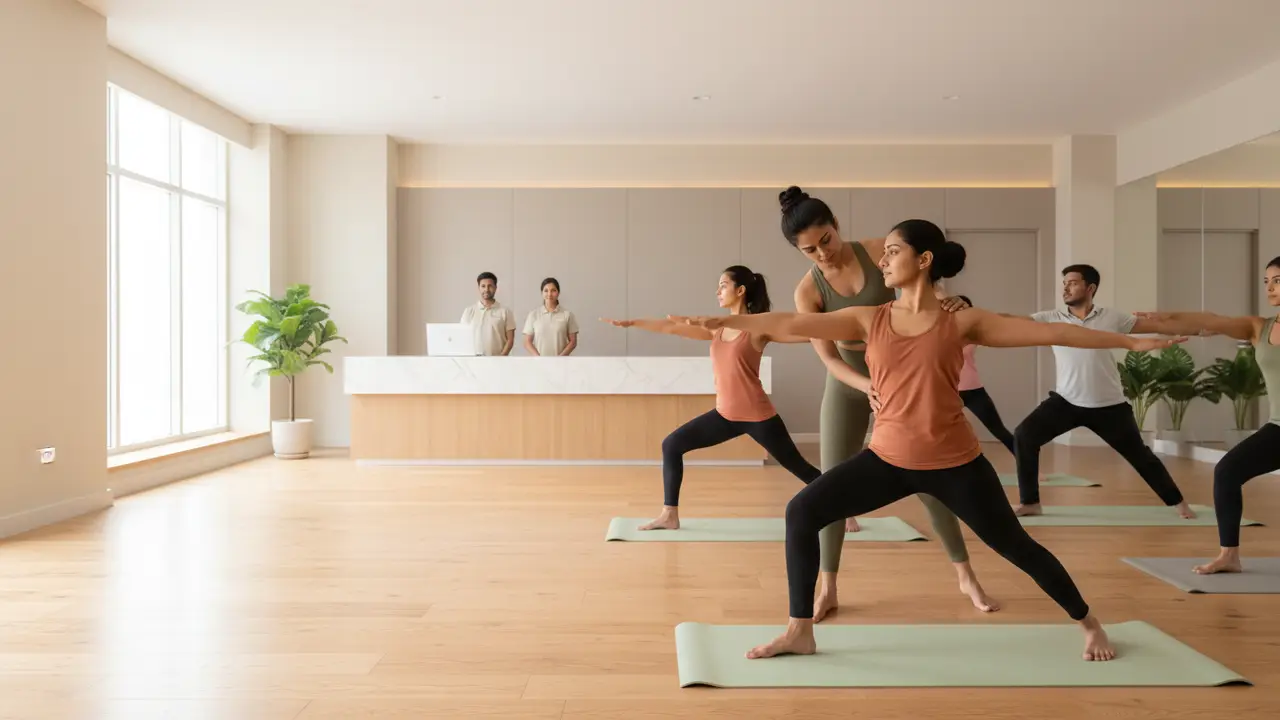
Why does a beginner choose the studio that looks calm?
Someone searching for a yoga class is often looking for a feeling as much as a timetable: a room that is clean, a teacher who is patient, a batch that will not be too advanced. They cannot visit five studios, so they read the profile. The photos, the way the description is written and the first few reviews do the job a reception desk would do if they walked in.
Style names are the searches
Students search for the style they have heard of: hatha, prenatal, therapy yoga, meditation, hot yoga. A profile that lists only “Yoga studio” leaves those searches to someone else. Listing each style you really teach as a service, with its timing, helps Google match you and helps the student see that their need is covered before they call.
Timings change more than you think
Yoga timetables shift with the season: earlier batches in summer, festival closures, a workshop on a weekend, a teacher on leave. A profile that still shows last year’s morning batch sends students to a locked door, and the review that follows mentions it. Keeping the timetable on Google correct is a small weekly job that prevents the most avoidable complaint.
What students write about studios
In the listings we checked, reviews of studios dwell on the teacher more than the building: patience, corrections that do not embarrass, attention for beginners. After that come cleanliness, the size of the batch and the fees. A thoughtful reply to a mixed review, one that thanks the student and says what has changed, reads well to the next student scrolling through.
Retreats, workshops and online classes
If you run weekend retreats, teacher trainings or online sessions, say so in the profile in the words a student would type. These are separate decisions from a weekly class, and they bring in people from further away, who judge you almost entirely by the photos and the reviews.